

Recently I was reading an article written by the Huff Post called True Life: I am a Book Club Drop Out. I am always drawn to topics on this as I am actually floored by how many times I head that a book club fails. When I chat about our book club here on-line many of you share with me your desires to be part of a book club but can not find one, or you share a group that you were once in that just could not pull it together. Through the years the main reasons I have heard for book club fail are:
- Not committed to the read (the book is supposed to bring them together but they never read the book)
- No one wants to take the lead and drive the conversation
- The meetings become more of a social time and those that really want to talk about the book fade away
- Too structured, no snacks, no extras, no fun
- personality clashes, you can’t agree on how your time should be spent so the group implodes.
- People who do not read the book, had no intention of reading the book, and month after month have nothing to contribute to the discussion. (While one in your group may not be a deal breaker, a few of them could be) *this is taken from a Barnes and Noble Article called why book clubs fail
- Your book choices do not encourage discussion. If you do not strive to pick books that will create conversation beyond “ooh the protagonist was cute!” (not that that is wrong 😉 ), your book club will become b-o-r-i-n-g fast.
- One person always chooses what is read so you never branch away from the one persons tastes.
- The group is just not interesting enough for people to fit it into their already busy schedules of work, kids, family, commitments…
- poor location – restaurants can become too loud to talk, home meetings require people willing to open up their home and have an environment that works for discussion
- Not valuing each others opinions on the books. You do not have to always agree, but you do need to respect each others thoughts.
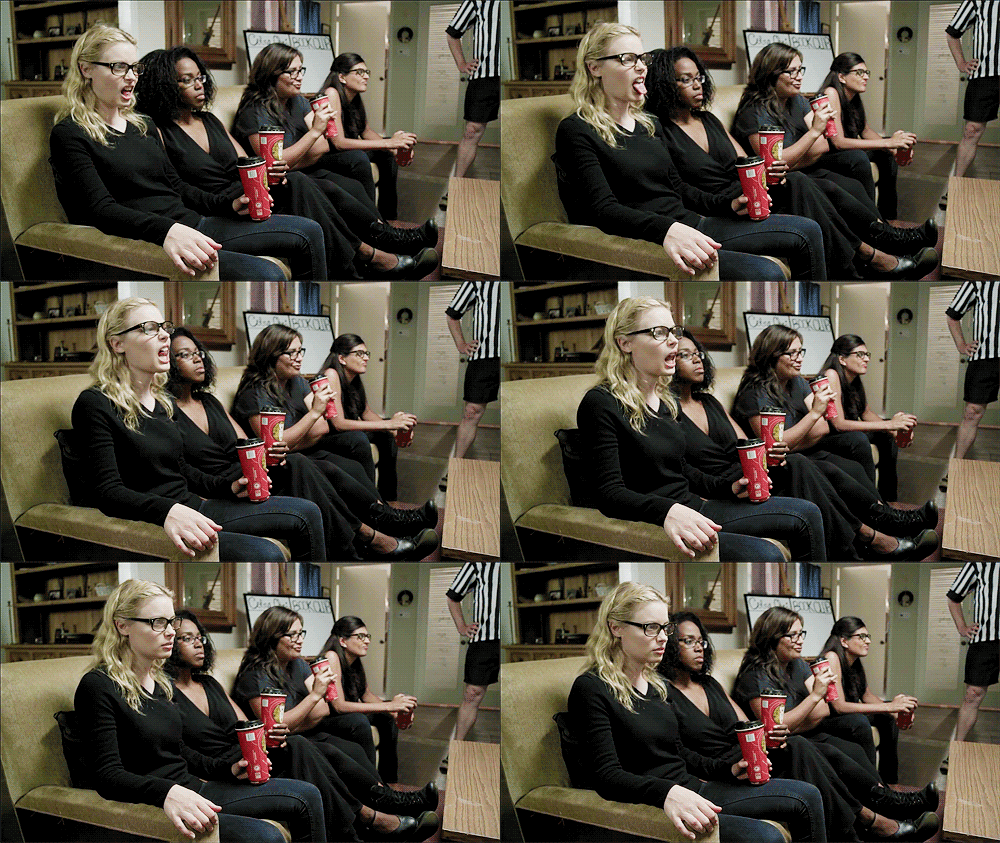
Am I am expert on successful book clubs?
No. I am simply someone who had an idea for a book club and the right people came along to support it. I honestly believe it is our group as a whole that makes us successful. We have had the bumps in the road…we are probably at one time or another guilty of everything I listed above. The difference I believe, is that we adjusted and we moved on.
It was not always easy.
I remember one particularly heated book club meeting from many years ago. The book was My Sisters Keeper by Jodi Piccoult and the discussion became pretty hot at the end of the night about the decisions that were made in the book. We had just went through a growth spurt in our group and I was still learning how to juggle the dynamics of a growing book club. I remember leaving the meeting and calling one of my friends who was also in the book club but was unable to make it that night. “I think we may have just discussed the book that killed book club” I said to her, and I was worried that it was true.
Since then we have had similar discussions over a read where someone may get emotional but the cool thing is, we have learned to grow together and appreciate each others thoughts and opinions more. It’s actually a beautiful thing to watch a group discuss a book openly without fear of retaliation or disapproval and some our deep discussions are my favorite memories of book club.

So lets discuss what makes a book club THRIVE. I do have friends on-line and off who are in book clubs and when I hear how they do their groups, I am thrilled to see that they have a plan that can succeed. Here are some thoughts on successful book clubs:
- Have someone in charge of sending out email/Facebook communications to your group regarding the book, the time, the place… these reminders are great!
- If your group is on Facebook – create a group page. This way you can send out reminders as well as discuss bookish things. This is a great way to continue a discussion after a meeting and those that were unable to attend can chime in.
- Don’t make it a lot of work for people to attend. If you do food and drinks keep it simple and rotate the people who bring something. Don’t give “home work” unless it is optional. If you think it would be fun to dress the decade of the read, put it out there and those who wish to… do it. 🙂
- Someone needs to lead the discussion. This can be the same person every time, or it can switch off each time you meet up but someone needs to bring discussion questions or topics and direction to your meeting.
- Everyone should have a chance to suggest a book or a turn at choosing a book. However you make that happen. We vote each month on suggestions that members bring to the meeting, other groups rotate who hosts and decides. Whatever works for your group.
- Ask the hard questions. Books bring up topics that are sometimes hard to discuss… for our group, this has led to some of our best discussions. Bring up the questions, if no one shares, move on… but give people an opportunity to share something about how they feel about what they read.
- Do not be afraid to rabbit trail. Books can open up personal stories and that is good. Sometimes I love to just sit back and watch the conversation flow around the book. I have learned so much about those in group when they share how they connect with a book.
- Don’t go too long! A good discussion from start to finish is around the 1 1/2 to two-hour mark. Value people time and know that some may need to work in the morning or still do things when they get home. Our group is currently around that two hour mark and that includes time to eat and chat with each other.
- Pick a size that works for your group. (We learned this the hard way.) Agree as a group how many members you will grow to (if you decide to accept new members along the way). This eliminates awkward discussions when you accept one persons cousin into the group but three months later turn down a members sister due to your group becoming too big. If you settle on a number, everyone will know where you are at.
- Its fun to encourage the little extras – looking up author info, having an author SKYPE, eating foods that surround the books culture or foods that are in the book, dressing up, going to a movie that was based on a book you read, occasionally attending a bookish event together that is in the area.
- If you are the discussion leader, think of something extra to add to your discussion – perhaps pictures of the time period, or try a new recipe that was mentioned in the book, artifacts, culture….
One thing that seems to be true, as the article mentioned, we want to be social. We want to bring our friends and hobbies into the same space.

I would love your thoughts on this topic, please add your thoughts on hits and misses for book clubs. How do you feel a good book club sustains life?





















 Book Journey