“I use Grammarly’s plagiarism checker because my super powered Blogerific Ninja Team Raphael and Biff, that scan the blogesphere for all things copied are not always as quick and efficient as I would like them to be. (Especially Biff, but do not say anything to him as he is HIGHLY sensitive.) 😛
Imagine… if someone you loved who has passed away – someone you had mourned for, grieved over and made deals with God about how much you miss them and only if they could return to you…
imagine…
if they did.
Harold and Louise Hardgrave had lived decades of this kind of loss and pain. In 1966, at the age of eight their only son Jacob had drowned at his own birthday party. As life tends to go on, even when we sludge through it… that is what the Hardgrave’s did… forming for themselves a life without Jacob and doing their best to move on.
And then one day, there he is. Jacob, at their door, looking just as he did at the age of 8.
And not just Jacob. All over the word that reports had been coming in for weeks that people who had passed on had suddenly arrived back at their homes, back in their loved ones lives… and no one can explain why. Is this the sign of the world coming to an end? Or the return of Christ? Or is it something darker…. something difficult to fathom when standing before you is the one that you have prayed for…. hoped for….
In a new and confused world, even Harold and Louise have trouble seeing eye to eye on how they feel about Jacob’s return. Louise is hook line and sinker ready to throw herself back into the role of nurturing mother and takes Jacob at face value. Harold however has reservations that this really is his son. He may look like him, walk like him, and talk like him… but he was there when his son had died. Life zapped away in a blink of an eye does nor return like that.
Does it?
Wow. Even before I started reading this book I had heard the scuttle around the edges of the internet of the mixed emotions this book was bringing out. That just made me more curious.
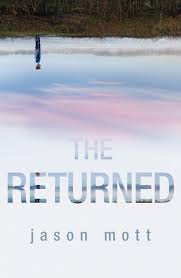
The Returned really is a fascinating topic for a book. As the book opened with Jacob at the door of his parents who have aged and stooped over the years yet here was their precious little boy looking as fresh and wonderful as he did before he left them I knew I wanted to know more.
The Return does very well at describing the emotions both accepting and abrasive as those who have passed on return to their homes and families rejoice. I even enjoyed the dynamics of what issues this would cause our world if this really did happen… for instance, The Returned had huge appetites. Always hungry they needed to be fed. And for that matter housed, and cared for. Suddenly as people keep returning, you can see where the once dead could soon out number the living. And, The Returned did not always turn up where their families were, some had no families… others had no desire to return to the family and friends they had so choose to go elsewhere…. etc…. fascinating stuff really.
What The Return (in my opinion) does not do well at, is coming full circle. The whole book I am waiting to see what is bringing the returned back from the graves. In the danger of causing a spoiler, but I feel a necessary one… it is never made clear, which to me made the book feel as though it was not fully thought out.
As readers, or at least I can speak for myself and say as a reader I want to read great books. Even when an idea, such as The Returned is a new topic (which I love it when that happens!), I still want to be intellectually stimulated and not just smile and read on for the sake of reading something that entertains my mind. I want to feel “WOW” when I come out of the last page. Unfortunately, as much as I can say I enjoyed the idea of The Returned and parts of the book, it did not have the full idea thought out therefore, leaving me wanting more.
My final thoughts, I did enjoy the book. I dont mean to come off as harsh in this review, just real. It is enjoyable and if thats what you are looking for, I would recommend it. If you like answers to questions that come up in your fictional reading however, you may feel a bit disappointed.
In other news, I heard that this book is being considered for TV. I would tune in to see what they do with it.










 Book Journey