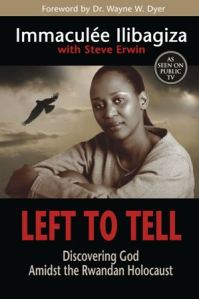
Left To Tell by Immaculee Ilibagiza

Immaculee Ilibagiza grew up as part of a loving family in Rwanda.  She had two loving parents and three brothers.  She was not raised to discriminate and was surprised when she went to school and was exposed to her teacher taking an ethnic role call and asked if she was Hutu or Tutsi.  Immaculee had no idea.

When she spoke to her parents about this her father went in and talked to her teacher.  She then found out she was Tutsi, not much of a difference between the Hutu, other than Tutsi are known to be taller and have slightly longer noses.  There are no religious belief differences.

At the age of 22, Immaculee came home from college to spend Easter with her family and at that time the Hutu

Immaculee was hiding in this bathroom with 7 other women for 91 days.

President of Rwanda died and subsequently started the war of Hutus against Tutsi’s.  This three-month war resulted in the brutal deaths (many by machete) of over 3,000 Tutsi.  Immaculee survived by hiding in a small bathroom ( 3 foot by 4 foot) inside her Pastor’s bedroom where she coexisted with seven other women.  They  did not leave the bathroom or make a sound for fear of being heard, for three months.  During this time, Immaculee prayed like she never had before, filled with faith and knowing that God was protecting them.  She did not know if her parents or her brothers were alive.

Three months later Immaculee who was 115 pounds when she entered into hiding, came out of hiding 91 days later weighing  65 pounds.

This is a true story of the Rwanda Genocide, from one woman’s perspective who lived it alongside those who survived a nightmare.

The Rwandan Military and Hutu militia groups, notably the Interahamwe, systematically set out to murder all the Tutsis they could reach, regardless of age or sex, as well as the political moderates among the Hutu. They incited Hutu civilians to participate in the killings or be shot in turn, using radio broadcasts to tell them to kill their Tutsi neighbours. Most nations evacuated their nationals from Kigali and abandoned their embassies in the initial stages of the violence.

As the situation worsened, the national radio advised people to stay in their homes. The Hutu Power station RTLM broadcast violent propaganda against the Tutsi and Hutu moderates. The militia put up hundreds of roadblocks around the country, using them to block off areas and attack the citizens. Lieutenant-General Dallaire and UNAMIR were in Kigali escorting Tutsis and were unable to stop the Hutus from escalating their attacks elsewhere.

Most of the victims were killed in their own villages or in towns, often by their neighbors and fellow villagers. The militia typically murdered victims by machetes, although some army units used rifles. The Hutu gangs searched out victims hiding in churches and school buildings, and massacred them. Local officials and government-sponsored radio incited ordinary citizens to kill their neighbors, and those who refused to kill were often murdered on the spot. “Either you took part in the massacres or you were massacred yourself.”

Rwandan Genocide – Wikipedia

It’s books like this that just make me really take a long hard look at my own life.  As I read about Immaculee, I was at our cabin on the North Shore of Minnesota.  It was cozy because I had turned the heat on, I had just baked a pan of muffins, reheated my Starbucks Vanilla Fusion coffee in the microwave, and was not sitting at the kitchen table typing these thoughts on my laptop.

Immaculee on the other hand, was living in a country where she was discriminated for having been born Tutsi, a title she knew nothing about and her and her family only wanted to live in peace.  She had run for her life because of this label, been refused shelter, separated from her family and holed up in a 4 x 6 room with 5 other Tutsi women in hiding from the rebel soldiers who were killing their family and friends with machette’s.

Oh how I wish this was fiction…

However – it is not.  This is  how life in Rwandan was in 1994.  Murders of entire families.  In 1994 I was still here in Minnesota, working a full-time job, raising my two boys who at the time were 3 and 5, and happily enjoying life with my husband.  In 1994, I knew nothing of what was happening in Rwandan.  While I fretted over balancing family, work, and friends…. Immaculee was wondering if she would live to see the sun rise.

A powerful book that ripped at my heart.  Immaculee is an amazing and strong woman.  Her faith made me feel lacking as she at times prayed for hours on end.   I read through this book feeling incredibly pained for a country I knew little about, and a great sense of appreciation for the story that I just had the privilege of reading.
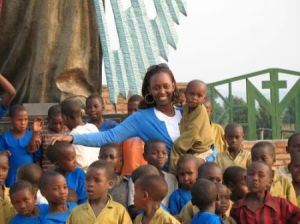
Proceeds from book sales will be donated directly to the Left to Tell Charitable Fund.

Amazon Rating

Book Journey has updated the 2010 Book Map to Include Left To Tell

Cover Story:  Fantastic!

I borrowed this book form my local library,

however I will be purchasing my own copy
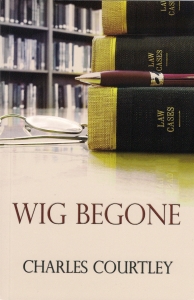
Wig Begone by Charles Courtney

Charles, a newly qualified lawyer without a penny to his name, plunges into the archaic world of the Bar as it was thirty-five years ago. After a stroke of beginners’ luck – and a taste of good living – he soon becomes established in practice battling away in the criminal courts, conducting court-martials in Germany and on one horrifying occasion actually appearing in a commercial court, “winding up ” companies of which he knows nothing! He encounters a wide range of clients including an Italian motorist charged with assault, who claims to have been savagely attacked by an elderly lollipop man wielding his road sign. On top of that, there are instructing solicitors who never pay him and even one who has departed this world altogether yet still manages to operate on a shadowy basis from the vicinity of Bow Road in East London. Court-martials take Charles abroad where he encounters a German policeman’s dog whose canine expertise is deemed to be perfectly sound evidence and samples a night out on the other side of the infamous Berlin wall just making it back to the safety of the West. Wig Begone is an exhilarating tale of Charles’ early career with disaster often lurking round the corner and culminating in his own appearance in front of England’s most notorious judge!

I have always enjoyed reads that surround a court setting.  I have no idea what the fascination is, but you can imagine years back I poured through many a John Grisham read for the thrill of the court cases, and more currently Jodi Piccoult.

Wig Begone however was a little bit of a different read for me.  Following the early career of Charles Courtley and his steps as well as miss-steps through those still “wet behind the ears” years.  The interesting thing about this read, is that the author is really Robert Seymour, a newly retired Judge who had once been a barrister.  This book, under the pen name Charles Courtley, is really a recap of the trials and errors of Robert’s career.  (yes, pun intended)

What started out as Robert Seymour’s memoir turned into this somewhat witty tale, that I found to be a welcome break from the usual court case reads I enjoy.  Quick paced, I loved the inner look of the court from the first person view of Charles.  Occasionally laughing out loud, and one incident where I actually choked on the popcorn I was eating while I read.

Did I enjoy the book?

Guilty as charged.  😀

Amazon Rating

Book Journey has updated the 2010 reading map to include Wig Begone

I read this book as part of a Pump Up Your Blog Tour

The DUFF by Kody Keplinger


Bianca Piper is seventeen years old, and a true and loyal friend.  When high school hottie, Wesley Rush points out to her that she is the DUFF among her friend, Bianca is confused.  Wesley goes on to say that DUFF stands for Designated Ugly Fat Friend, and Bianca does what any girl would do in this situation; she throws her coke in his face.

But the name doesn’t fade away.  As the days go by, Bianca really starts to think of her as the DUFF in her group.  According to Wesley, every group has one, and Bianca knows she is certainly not the prettiest among her friends.  With her family life in shreds with a mom who has found other interests besides her home and a father just one step away from falling off his eighteen years of sobriety…. Bianca becomes eager for an escape – and in her sights is none other than Wesley.


DUFF?  This word was a new one to me and I cautiously entered into this read.  Kids are cruel enough to one another without adding more words to their vocabulary was my initial thought here.  DUFF is just a cruel label.   And true to many labels, the person bearing the label tends to think that is who they are… ripping away at their self-esteem – and that is what happens in this book to Bianca.

Bianca starts out having never heard of DUFF, but once it was pinned on her by Wesley – she felt in her heart it was true.  Certainly she was no match for her peppy, beautiful, and certainly thinner, friends.  Bianca’s actions start to change as she pulls away from her friends and finds her release through none other than Wesley himself.

As I mentioned, the book concerned me and Bianca’s actions reflected that concern.  Labels hurt.  But then – author Kody Keplinger surprises me by bringing this label full circle and in the end you come to realize we are all in a way the DUFF, and we all have our insecurities.

I wanted to love this book, and in many ways I did.  I enjoyed the characters and the writing and actually flew through the book in one sitting.  Afterward, I thought about what age the book was written for, and while I read it as a light quick read, if I had a daughter who was 12 – 15, I am not sure I would want her reading it.

The Wesley and Bianca relationship is very sexually charged.  Very.  For a YA read I have to share that there is a lot of casual sex going on in this book between these two characters .  There is also quite a bit of strong language in the book.

While I enjoyed the writing, I did struggle with where Bianca  found her self-worth.  I know there are topics in the book that explain this, but due to how much I struggled with this – it took me three months to post this review.It is a book that I think an older YA would enjoy the writing, but I do have concerns of younger YA’s reading this book.

If you can get beyond the parts that concerned me, the overall message is a good one and I closed the book liking the outcome.  There are many reviews of this book so please read other opinions.

I met Kody Kempler in New York in May at BEA and enjoyed talking with her and listening to her talk about this book.  Kody started writing the DUFF when she was 17 and is now 19 years old.


Book Journey has updated the 2010 reading map to include The DUFF

Cover story:  It’ s an ok cover and I feel it attracts the audience it was written for.


I received my review copy in New York at BEA


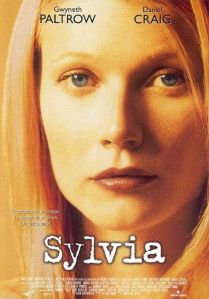
Sylvia (The movie based on Sylvia Plath – The Bell Jar)

I recently watched the movie Sylvia, the story of the turmoil life that was Sylvia Plath’s.  Having recently read The Bell Jar for book club I found myself fascinated with the woman behind the words.

The movie is mainly about Plath’s life at the point that Ted Hughes (eventual husband) comes into her life.  The start of their time together is much like a fairy tale of fun romance from meeting each other, to Ted tossing small rocks at her window at night.  It appears to be the start of something beautiful.  However, soon Sylvia finds herself struggling to write the poems she is known for and becomes more and more consumed with her husbands doings.

I really enjoyed seeing this side of the Sylvia Plath story.  No, enjoyed doesn’t sound right…. I really appreciated being able to see this side of the story.  Having read The Bell Jar and knowing the little bit that I knew about Sylvia and her life, this really pieced things together between the strange passion of the book, and the flame that burned inside Sylvia herself.

When I went on-line I was fascinated to see how many books are out centered around either Sylvia’s writing, or her life as well as her husband Ted’s.


Ariel’s Gift:  Ted Hughes, Sylvia Plath and The Story Of The Birthday Letters

Birthday Letters: Poems by Ted Hughes

The unabridged Journal of Sylvia Plath

The Collected Poems by Sylvia Plath

The Bell Jar by Sylvia Plath

Letters Home:  Correspondence by Sylvia Plath

Crossing The Water by Sylvia Plath

On February 11th, 1963, Sylvia Plath committed suicide.  She was found dead in her kitchen having inhaled gas from her oven.

A year later Ted Hughes oversaw the publication of her last manuscript of poems.  The collection, ‘Ariel’ became one of the most celebrated and widely read books of poetry of the 20th century,and made Sylvia an icon for generations of readers.

In 1998, Ted Hughes broke a thirty year silence about Sylvia with the publication of ‘Birthday Letters’, a series of poems telling the story of their relationship.  He died of cancer a few weeks later.

Overall I would say this is a wonderful companion to The Bell Jar.

I rented the movie Sylvia through Netflix

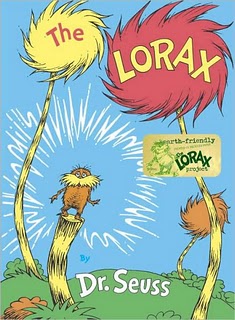
The Lorax by Dr. Seuss (a late Banned Book Review)

At the far end of town

where the Grickle-grass grows

and the wind smells slow-and-sour when it blows

and no birds every sing excepting old crows…

is the Street of the Lifted Lorax.

And so begins the sing-song rhythmic read of The Lorax.  Do you remember this book?  The pictures of the colorful and fluffy Truffula Trees.  That is until The Old Once-ler came round, and decided he need to chop the trees down (intentional rhyme)  😛

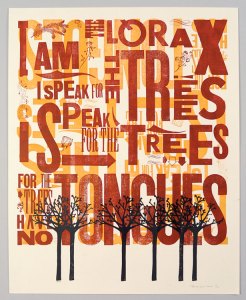
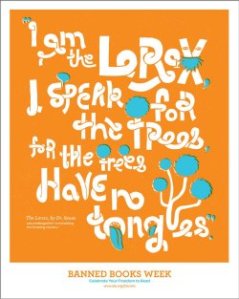
Then the Lorax showed up to speak for the trees, he said do not cut them I am asking you please!

(Ok… now I can’t stop so I am just going to go with it)

The Lorax tried to stop the factory that was built, but progress was already moving full tilt!

With no more trees the Bar Ba Loots had nothing to eat, but really its just business so sadly they  retreat.

As the story goes the end came at last, with no trees and no animals all was in the past…

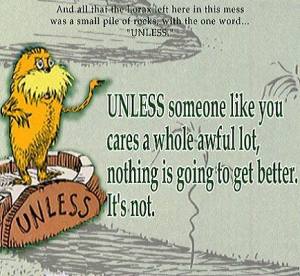
Yet one seed did remain and plant it we must, for the future is ours and to us it must trust.

I checked this out from the library for banned book week.  This book just brings back the memories of all sorts of Seuss moments, and while this is not one of the big names I remember (Cat In The Hat, One Fish, Two Fish, Hop On Pop…) it is one that does hold a message.

I just loved reading it again!


Why was The Lorax a banned book?

The Lorax was banned because it was felt to cast a negative look on the forestry industry.

In 1989, the Laytonville, CA Unified School District tried to do just that. They challenged the book based on someone’s belief that it criminalizes the foresting industry.


I borrowed this book from my local library


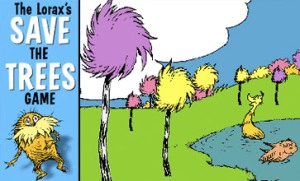
Did you know The Lorax was also a game?

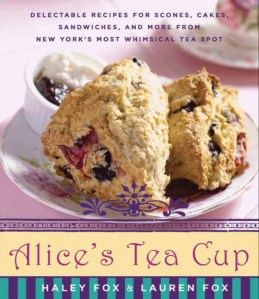
Alice’s Tea Cup by Haley Fox and Lauren Fox

Once upon a time in New York City, there were two sisters.  Their father was a spinner of tales, always armed with a freshly brewed mug of English Breakfast Tea.

Their mother was a seamstress who loved to be out and about, and together, they would take the sisters to afternoon tea wherever it was served.  The sisters learned at a very early age that tea was more than a beverage – it was an even to be shared and protected.  Tea was a sacred experience, whether at a hotel or at a home; it was a time to connect, share your thoughts and drams, and escape for a spell.

And that is how Alice’s Tea Cup came to be…

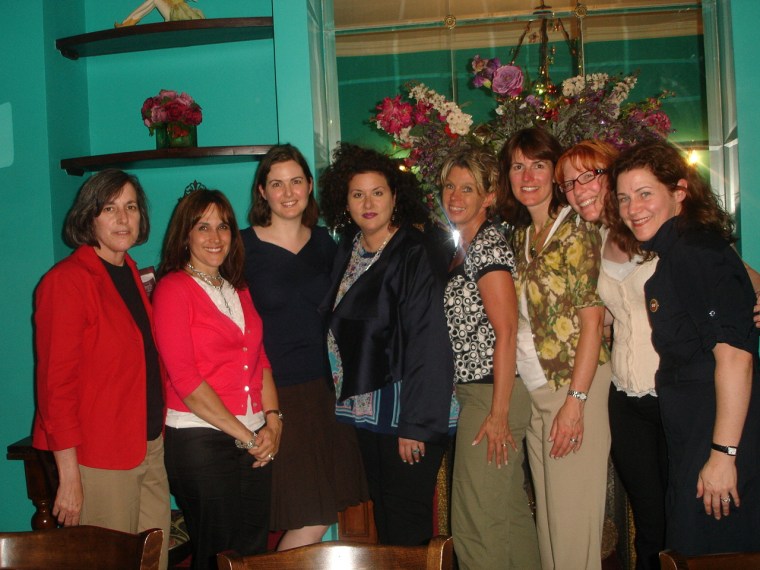
Ahhh….. Alice’s Tea Cup is memories of May….  I was here with several wonderful book bloggers and the amazing Adriana Trigiani during BEA.   At that time this book was not out yet, but we were each promised to have the book sent to us once they had it ready.  You can imagine my SSQQUUUEEEE level when it arrived at my home recently.  What a treasure!


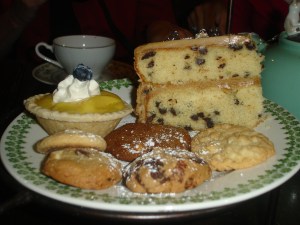
Filled with gorgeous pictures and recipes of cookies, muffins, scones, frosting and more… I literally drooled over the pages and remember the mouth-watering treats that we were served that day.  Authors Haley and Lauren show us how to celebrate with tea and festival foods, not only the delicious treats but also soups and salads that I can not wait to serve in my own home.

My only regret with this book…. the pictures were not scratch and sniff.  😉

This is a lovely gift book that I am beyond thrilled to own not  only this treasured book… but the memories it holds for me inside the pages.

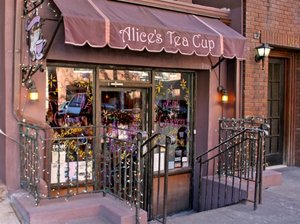
Alice's Tea Cup in May 2010 with Adriana Trigiani

Book Journey has updated the 2010 reading map to include Alice’s Tea Cup


Thank you thank you thank you to Harper Collins

and of course to Adriana Trigiana who was the reason I experienced the amazing  Alice’s Tea Cup!

The Bell Jar by Sylvia Plath

The Bell Jar is told from the perspective of Esther Greenwood.  You would think she had the perfect life… young, beautiful, talented, successful… yet she is deeply troubled and sinking fast.   She starts with a painful month in New York after she won a contest to be Junior Editor on a magazine.  What most girls her age would be fascinated to win, Esther only found it troubling.  She has a troubled relationship with her mother, and with a boy she dates on again and off again, but really finds she can not commit to anything -including life itself.

♦     ♦     ♦     ♦     ♦

A bell jar is a piece of laboratory equipment similar in shape to a bell. It can be manufactured out of a variety of materials, ranging from glass to different types of metals. A bell jar is placed on a base which is vented to a hose fitting, which can be connected via a hose to a vacuum pump. By pumping the air out of the bell jar, a vacuum is formed.

I read this with my book club for our annual October Classic read.  I love that we commit to a classic every year and good or bad, the discussions over a classic are always pretty fantastic.  When we reviewed this on Tuesday, I was not done with the read and I blew a chance to really analyze this book with my group.  I finished this a couple of days after.

I had read up on Sylvia Plath’s life prior to this book and was extremely fascinated by how much this book parallels her life.   While the book is about a deep depression, I did not find it depressing.  The start of the book is her time in New York and the last third is while she is in a Mental Hospital. As one of the girls in our book club stated, as Esther finds herself deeper in her depression and break down – the writing becomes even more beautiful.


“I saw my life branching out before me like the green fig tree in the story. From the tip of every branch, like a fat purple fig, a wonderful future beckoned and winked. One fig was a husband and a happy home and children, and another fig was a famous poet and another fig was a brilliant professor, and another fig was Ee Gee, the amazing editor, and another fig was Europe and Africa and South America, and another fig was Constantin and Socrates and Attila and a pack of other lovers with queer names and offbeat professions, and another fig was an Olympic lady crew champion, and beyond and above these figs were many more figs I couldn’t quite make out. I saw myself sitting in the crotch of this fig tree, starving to death, just because I couldn’t make up my mind which of the figs I would choose. I wanted each and every one of them, but choosing one meant losing all the rest, and, as I sat there, unable to decide, the figs began to wrinkle and go black, and, one by one, they plopped to the ground at my feet.”


While not the easiest read, I think it is an important one.  As I flip between the pages of information I have on Sylvia Plath and The Bell Jar’s Esther Greenwood… I can’t help but think how much of this book is Sylvia’s story.


The book first published in January if 1961, and Sylvia Plath committed suicide in February of 1963.  It was first published under the name of Victoria Lucas.  The novel was not published under Sylvia’s name until 1967 and not published in the United States until 1971 per the wishes of Plath’s mother and husband.


Why Was The Bell Jar Banned?

The Bell Jar has been challenged because it openly rejects traditional marriage and motherhood.  It has also been challenged for it’s characters discussion of sexuality.

I purchased this book at the local fall library sale

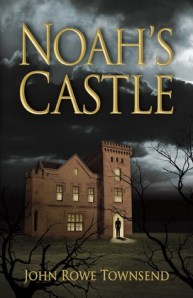
Noah’s Castle by John Rowe Townsend

There are rumors of hardships to come in England and Norman Mortimer’s is not the type of man who just sits around and waits for things to happen.  He is a man of action and forward thinking.  Anticipating the worst, Norman moves his family from their lovely home to an old drafty castle looking home, a fortress really.  He secretly starts spending a lot of time in the basement with his son Geoff, hammering away at something that his wife and his other three children Nessie, Barry, and Ellen know nothing about.  Later it is discovered that Norman has built shelves all along the basement walls and has stock piled canned good and food staples.  He plans ahead by purchasing clothes for his children in larger sizes to accommodate growth.  In Norman’s plan, his family will be able to survive whatever hardships come their way and he will protect them and their home from the outside world.

But can such a plan work?  As the times get hard, and food is being rationed and stores are closing and people are starving…. what are the moral realities here?

Well hello dystopian fiction!

Days after I have finished this book I am still questioning how I felt about it.  I started out finding it slow and immediately taking a string dislike to Norman as a father and especially as a husband.  His lack of including his wife in any of his decisions and how he treated her as a possession without an opinion rubbed me the wrong way.

Early on in the book I sat it down and went on to a different read.

This past weekend I picked the book up again during the read-a-thon and found to my surprise that I was getting into the story line.  As England took the predicted economy turn, I had to wonder was Norman a genius or a control freak?  Or both?  I especially liked Norman’s son Barry who seemed to have a good head on his shoulder’s and cared about others outside his home as families were literally starving to death.

What was interesting is that this book was originally published in 1975 and recently re-published.  While there were parts of the book I enjoyed reading and found interesting, the ending felt unfinished to me and I found I had many questions unanswered.  I closed the final page with out a solid feeling about the book that still has not really left me.

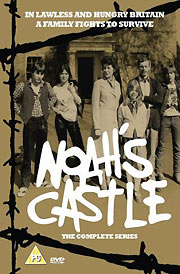
I found on-line that apparently there once was a TV series of Noah’s castle that is out on DVD.


I also found this ring tone for Noah’s Castle which is supposed to have been taken off the ending theme song.

I received my copy for review of this book from October Mist Publishing

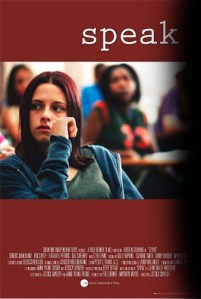
SPEAK the movie

After a blurred trauma over the summer, Melinda enters high school a selective mute. Struggling with school, friends, and family, she tells the dark tale of her experiences, and why she has chosen not to speak.


During Banned Books week I had the opportunity to review the book SPEAK by Laurie Halse Anderson.  The book was brought to my attention during the big hype about the recent controversy surrounding the book and its status as a banned and challenged book.  I read the book and found it to be very well and tastefully done.

While doing a little research on the book I was surprised to discover it had also been a movie.  Surprise #2 was that the lead role of Melinda was played by non other than Kristen Stewart (you may know her better as Bella in the Twilight movies).  I was instantly fascinated with this early role for Kristen as well as the movie itself.

Thank goodness for the miracle that is Netflix.  I was able to find the movie that was released in 2004.

I appreciated the movie as much as I appreciated the book.  Again, I was brought to the brink as I relived the books harder parts through the screen.  Kristen Stewart does well in this role being at first silent with fear and later, able to SPEAK of what has happened to her.   I found this movie to a wonderful companion to the book and highly recommend this to those who have had the opportunity to read this heartfelt book of a young girl’s life after rape.


The Absolute True Diary of a Part-Time Indian by Sherman Alexie

Arnold Spirit (known as Junior at home) is a 14-year-old Spokane Indian.  He was born with water on the brain, is regularly picked on by his peers, and loves to draw pictures.   He refers to the world as a series of broken dams and floods and his pictures are tiny lifeboats.   He loves basketball, and is fairly good on the Spokane Team.  He decided if he stays in the reservation all his life he is never going to go anywhere just like his parents.  They too had dreams once of being something more.  He requests that they let him go to the rich white school in Reardan which is 20 minutes away.  His parents agree.  This destroys his friendship with his best friend Rowdy, who has always been this crazy Native American kid who will beat up anyone who looks at him twice.  This once meant Rowdy  was a source of protection to Junior, and now includes Junior in the beating category.

What happens when Arnold (known as Arnold when he switches schools) is that he once again finds himself the blunt of jokes and discrimination.  He stays at his new school, determined to make it work, even sometimes having to walk  the twenty minutes to and from when his dad does not have enough money for gas in the car.  Eventually he makes a few friends along the way, and is able to find a happy medium between his life on the reservation and his school that is not.

Confession time.  I picked this book up as part of Banned Books Week.  It came to my library late but I still wanted to read it.  After I brought it home with several others I looked up why it was banned.  On line it said that is was banned for talk of masturbation, racism, and vulgar language.  I almost returned it to the library unread.  It was honestly, the first of all the banned books that I read this past couple of weeks that I can say I questioned if I wanted to read it or not.  I  don’t condone banning, not in the least, but I do believe in our rights to choose  to read a book or not.


However, I listed this book on a post about the books I had received at my library and I started receiving comments from people who had read this book saying what an amazing read it was, some even calling it a favorite.  A few others who hadn’t read it said that they had been wanting too.  To all of these people, I say thank you.  If not for you, I may have missed out on an incredible reading experience.

So I was cautiously optimistic when I opened up the book, still reserving the right to put it down at any time. (Oh the conversations I have with myself sometimes… :razz:)


I didn’t put it down.

The parts that I felt may have been unnecessary were so small.  They did not take away from the book.  I read this story told from a 14-year-old boys perspective and I have to say I really enjoyed the incredible insight he brought into race, stereo types, and color.

The pictures throughout the book are so important to the story line and really give Arnold’s story a life.  The pictures add to what he is feeling, be it happiness, confusion, anger, or pain.  You can see it all, and for me, I could feel it as well.

As Arnold shares his story I was reminded again how strong prejudices can be when people see through eyes of judgment.  What I also seen was that the power of friendship and acceptance has a much stronger presence and hold.

While I would not say hand this book to your young child, I do think it is an important read for older YA and holds within its pages an amazing read that I will not soon forget.


I picked up this book from my local library

I would however, love to own this read.