Author Chat with Erika Robuck, author of Receive Me Falling

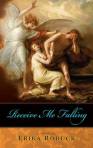
author chatOver the weekend I was able to indulge in the Read A Thon and the first book I finished was Erika Robuck’s wonderful read, Receive Me Falling.  Today, Erika has graciously agreed to hang out with me and discuss her book and what the future holds. Please join us over a great cup of coffee.


erica

Erika, thank you so much for hanging out with me today at One Person’s Journey Through A World of Books.  Erika, I have to ask about how this incredible read came to be.  What were the early thoughts about how this book would be written?  What was the draw to write about slavery?

Erika: A black and white photo of an abandoned, fortress-like hotel in Nevis with island children playing in the foreground of its imposing facade inspired me to write my book.  It got me thinking of slavery in the Caribbean, the contrast of the wealthy and the poor, the two classes interacting with one another on a daily basis, and the complexities slavery created in familial and generational relationships.

I’ve been drawn to books about slavery since I read Toni Morrison’s Beloved and Frederick Douglass’ Narrative of the Life of an American Slave.  Both touched me deeply.


I love that!  What a great image! Is there something that draws you to the time period you wrote about?

Erika: I wanted to write about slavery as it was ending in the British colonies for a couple of reasons.  First, it allowed me to educate my readers about the process of abolishing slavery and what was going on in England and the Caribbean at the time.  Second, I’ve always been drawn to the early nineteenth century because of the music, art, and literature representative of it.


I found this story line so interesting.  I really have not read much about slavery in the past and you really opened up a new area for me.  I found it very meaningful and I really was given a lot to think about by reading this book.   This is your first book.  That astounds me!  Were you nervous about finding a publisher?  Can you briefly explain the process you went through to find one?
aErika: After work shopping the novel for several years, I began the agent search.  I kept getting very far in the process, but continued to get turned down based on the fact that I was a first time, unpublished writer whose book crossed genres.  Publishers like books to fit neatly into categories, so a semi-historical novel with supernatural elements wasn’t well received from a novice.  However, many readers who had read drafts of the novel encouraged me to publish it myself so they could take it to their book clubs, mothers’ groups, and art festivals.  I was reading agent blogs where they advised first time writers to self-publish, build their platform, and if they were successful, use that in the query process.

My husband and I started a small press, published the book, released it for sale in March of 2009, and have sold about 1,000 copies.  I’ve been profiled in local papers and publications, have visited 20 book clubs that have read the book, and have had many signings and author events. Several agents have the full manuscript, and I hope to have an offer of representation soon.


You started your own press!  That is so great!  I really had a vivid image of the scene of the dead slave girl (page 153).  I found it to quite powerful.  I am curious as to what caused you to write about this particular scene.  What are you looking to show the reader?  To show Catherine?

Erika: The contrast of the rich and the poor was stark, and I wanted to emphasize that as much as possible.  I also aneeded my protagonist to see the horrors of slavery outside of her plantation.  Her slaves had been raised with relatively less violence than neighboring plantations, so I wanted my character to witness, first hand, the brutality of most plantations so that she would be more open to the abolitionists when they approached her.

The rum drinks throughout the book were almost a light fun part of what really is a good but not lighthearted read.  The drinks were actually a bit of “fun” I thought.  I liked how the drink title matched Meghan’s mood or what was happening.  Why did you put this in the book?

Erika: I wanted the reader to see Meghan’s personality prior to the incident with her parents and her fiancée to reveal that, before all of the tragedy, she was a girl who liked to have fun.  (Sometimes, she liked to have too much fun!)  Alcohol abuse was a prevalent theme in the novel both in the past and in the present.  I wanted to make the reader aware of when Meg used alcohol to self-medicate.  I had originally included the recipes in with the text, but an editor told me that didn’t match the serious tone of the book, so I just included the drink titles.


I read that you have another book in the works.  Can you share a little about this and when we can be looking for this one to come out?

aErika: Right now I’m immersed in researching Depression-era Key West, the Labor Day hurricane of 1935, and Ernest Hemingway.  Key West in 1935 is the historical setting of my latest work of fiction.  My protagonist is a housekeeper at the Hemingway home, and is torn between the legendary writer and a soldier.  I’m about a third of the way through a first draft of the novel, and hope to have a completed draft by the end of the year.
I would love it if you would share with us something that few people may know about you.

Erika: I used to be an elementary school teacher, and won a teacher of the year award my senior year in college.  I think my background in teaching and my love for research is important to my work as an historical fiction writer.

And like my present day protagonist, I love karaoke.

A teacher!  That is wonderful!  Thank you so much Erika for your time!  I adored your book and look forward to reading more of your work in the future!

Erika: Thank you!  I’m so glad you enjoyed the book!


See more about Erika Robuck here at her website as well as what is coming up for her.

Erika also blogs!  See her blog here

Author Chat with Cami Checketts

author chat

I have just finished a wonderful book by Cami Checkett called The Sister Pact.  Now I am very excited to have Cami here to share with us a bit about her book, her path as an author, and a little about herself.

Please pull up a chair and welcome, Cami Checketts.

Cami, thank you so much for joining me here today at One Persons Journey Through a World of Books.  I have to say I have really enjoyed  reading your book. The Sister Pact.  What was the idea behind this book?

camCami:  I had a nightmare about a man accosting my sister and pushing her down the stairs. When I woke, I started writing and the story just spilled out.


The characters Savannah, Allison, and Noah, even Wes – are well developed.  How did these characters come about for you?  Was the book always going to be about sisters?

Cami:  I always see my characters in the nightmare that creates the story. I know what they look like, a bit about their personalities from that initial nightmare. When I start writing the characters take on a life of their own. I’m also a big daydreamer, so I focus my daydreaming on my current WIP and get all kinds of interesting conversations and tidbits about these new friends.
The book was always written for my sister, Abbie. The romance sprang up on its own.

What was the hardest part of this book to write?

Cami:  Wes (the bad dude). He was so cocky and twisted. I hated getting inside his mind.


Of the books you have written, do you have a favorite and if so, why?

That’s like asking what my favorite chocolate is. Love every piece I inhale! My favorite book is always the one I’m working on because I’m so immersed in the story and characters. But I have to say that I still have daydreams about Ethan from The Broken Path. He’s one of those heroes that you can’t forget.


LOL… I suppose that wasn’t a fair question!  How did your writing career begin?

Cami:  After my second son was born, I fought post-partum depression. My mother woke me up for a nap one afternoon and said, “You need a hobby. Go downstairs and write a book.” I shrugged and said, “Okay.” Haven’t had time for a nap since!


If you were to identify a message in The Sister Pact that you would like your readers to take away what would it be?

Love yourself. You can’t truly love others if you don’t feel good about you.


That is a great message.  Do you have a favorite book?

I would have to say The New Testament. It’s one of the only books I’ve read more than once! I truly have so many favorites. The best ones I’ve read lately are: Saving Madeline by Rachel Ann Nunes, Lemon Tart by Josi Kilpack, and Illuminations of the Heart by Joyce DiPastena.


Books I will have to look into as they come highly recommended by you!  So what is next for you?  Is there another book in your future?

Cami:  I’m sending off my next manuscript today. It’s a book about a mom who blogs against certain television stations. The owner of the stations sends a hit man to take care of her. It’s so terrifying to me I won’t let my husband go away on guys trips until I’m finished with this book.


Wow!  That sounds like a great read.  What is one little known fact about you that you could share here?

Cami:  I once won a Dairy Princess contest because I was the only one who could get milk from the cow.

Thanks Cami!  I appreciate you taking the time to stop by and I cant wait to look into your current books as well as get a look at the new one!

Cami:  Thank you, Sheila! Many blessings!

Here is some fun information I learned about Cami!  She loves fitness and is actually having a contest starting in October!  Check it out here and check Cami out below as she teaches us great fitness tips!

Author Chat with Donna Woolfork Cross (Author of Pope Joan)

donna2006

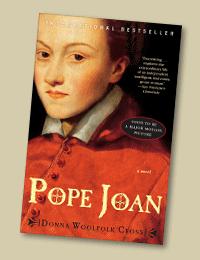
If you have been reading here at One Persons Journey Through a World of Books for any amount of time you know that one of the best reads for 2009 has been Pope Joan by Donna Woolfork Cross.  I loved the character of Joan, this strong independent woman born in a time when women were not considered worth much more than for birthing children.  I cant even put into words how I felt as I read this book and followed Joan from birth to Pope.

Through several email conversations, I have communicated with Donna Woolfork Cross about this book and about the upcoming movie of Pope Joan due out yet this fall!  I can not even imagine what Donna’s life must be like right now, I know she has observed filming and met with producers…. and yet, she took time to chat with me so I could share with all of you a little about Donna, Pope Joan, and whats next…

Please welcome the amazing Donna Woolfork Cross!!!


Sheila:  Thank you so much Donna for taking time out of your busy schedule to chat a bit with me.  I am so thankful for your kindness and continued communication.

Donna: Hi, Sheila!  My gosh, any author should be very grateful to have you on her side!  Thanks SO much, yet again, for your heart-warming–and energetic– support!


Sheila:  Donna, Pope Joan is an incredible historical fiction read that I for one (and I know I am not alone) could not put down.  Have you always been a fan of history?

Pope JoanDonna:   Thanks for the kind words, Sheila!   The truth is that I HATED history in high school and college, for it was so boring–filled with “memorized” information like dates and names of battles and lists of kings, etc.  As I was a good student, I faithfully learned these dry facts and put them down on my exams–and then promptly forgot them.  It was years later before I realized that history isn’t composed of dry old facts and dates and names;  it’s the most fascinating subject of all, for it’s composed of stories–of people who loved and fought and lost and grieved and sacrificed.  What could be more interesting than that?  Story-telling is a very primal act for humans; when we lived in caves we sat around the fire and told tales to each other.  Children crawl into our laps and beg, “Tell me a story!”

Historical fiction captures this story-telling essence of history.  It’s “You Are There” history;  it transports us in time, makes us feel that we have walked those streets, drunk that wine, worshiped those gods.  That’s why it’s my favorite form of leisure reading!


Sheila:  How did you come to the decision to write a book about Pope Joan?

Donna: I had written four previous books–non-fiction works about word and language.  They did well enough, but let me tell you, no one’s ever going to be able to retire by writing word books!  It was my daughter who suggested to me that I might want to write the kind of book she knows I most enjoy reading–historical fiction (for all the reasons mentioned above).  I was mulling that idea over–wondering if I could make the leap (no small one) from non-fiction to fiction, when I stumbled across Joan’s story in a piece of chance reading.  At first I thought it was a typo–an amusing accident that substituted the name “Joan” for “John”.

But a couple of weeks later,  I happened to be in a library.  And idle curiosity led me over to the the “New Catholic Encyclopedia”, just to check out that odd passing reference to a “Pope Joan.”  Tell you the truth, I didn’t expect to find anything.  But when I did find an entry for her in the NCE, I stood in that library with my jaw dropped open.  I couldn’t believe it–here was a story included in the work of  famous writers like Petrarch and Boccaccio and Platina, librarian to several Popes–and I hadn’t even HEARD of it?  I think I knew on the spot that it’s what I wanted to write about.  I thought then–hey, I still think–that it’s a “drop-dead” story.  I couldn’t believe I’d had the great good fortune to stumble across it!


Sheila: I think it is exciting enough to be a write (a dream I have always had!), but I can hardly imagine what it would be like to write something that is destined to be a movie.  Can you share a little bit how that happened and what that had to feel like?

Donna: If you dream of writing, Sheila, then you will one day do it!  For the simple truth is that writing is much more “perspiration” than “inspiration”!  Whether someone likes my novel or not, I can tell her this: it represents the very best I could do.   Over the long course of seven years of seven years of research and writing, I really came to care about Pope Joan, and to admire her, so I gave this story my all.  Naturally, I was nervous about what the movie version would be like (one fellow writer described optioning our novel to Hollywood as “handing your child over the the Charles Manson Day Care Center!)

Fortunately, I was lucky.  The movie stays true to the “female empowerment through learning” theme of the book that was so important to me.  And the acting is terrific!  Johanna Wokalek, a newcomer to U.S audiences is brilliant as Joan;  John Goodman is a PERFECT Pope Sergius;  and David Wenham (voted “Sexiest Australian of 2007) is very powerful in the part of Gerold (when he asks Joan to go away with him, giving up everything that she has become and achieved, you really understand her temptation!).

When I was standing on the set, watching scenes enacted that I remember writing in the privacy of my study, I was very moved.


Sheila:  What at this time as readers can we be doing to make sure the movie and the book, get around to where people all over the world can enjoy them?

Donna: What a dear and thoughtful question to ask, Sheila!   There’s two things one can do immediately:

1.  Buy the book in August!  For healthy book sales in August will help persuade U.S. movie distributors that there’s a broad audience for this story in the U.S.  Also,  if you purchase the book on or before August 9th, you are eligible for my unusual “Walk the Red Carpet” offer–an opportunity to join me and my family at the U.S. movie premiere.  Details are at http://popejoan.com/2009promo.htm

2.  Let U.S. movie distributors know if you’d like to see the movie open in a theater near you.  You can do this by going to http://popejoan.com/moviemap.htm.   If you would attend with others, such as book group members or friends and family, mention that too.  Your words will go straight to the producer’s ears!


Sheila:  What’s next for you?

Donna: Just at the moment, I’m working so hard to promote Pope Joan, long labor and work of my heart,  that I’ve had to put aside my next novel for a while.  I hope to resume work on it this fall.  It’s about another strong woman from history, this time from 17th century France. I admire her for many of the same reasons I came to admire Joan–reasons best summed up with a quote from George Bernard Shaw. “Reasonable people,” Shaw wrote, “adapt themselves to the world the way they find it. Unreasonable try to change the world to fit their own vision of it.  Therefore, all progress depends on unreasonable people.”

Following that (in my view) very complimentary definition of the word, Joan was, in fact, an unreasonable woman. So is my next heroine, whose name, I bet you’ve noticed, I have artfully not mentioned (my agent tells me that she’ll cut out my tongue if I do!).


Sheila:  Thank you Donna so much for taking time to hang out with us here.  I am excited to see the movie come out and hopefully a push from my fellow book lovers can help move that along!


Please see my review of Pope Joan here